At Restaurant Latour at Crystal Springs Resort in northwestern New Jersey, dinner deserves its own place on the itinerary. The mountain views, cocktails made with ingredients foraged on the property, and wines from an extraordinary cellar make it worth the visit. Then there is the pleasure of letting the kitchen decide what comes next.
During our recent stay at Grand Cascades Lodge, we settled in for Latour’s seven-course tasting menu. With each arrival came an explanation of a dish or pairing, giving us plenty to consider between bites.
Three Courses or Seven?
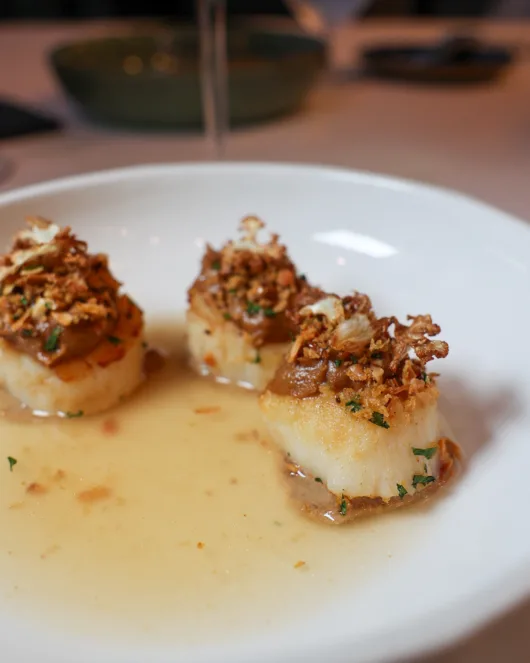
Restaurant Latour offers two ways to experience the kitchen: a three-course menu with your choice of dishes, or a chef-selected seven-course tasting menu.
The three-course option gives diners more say in the direction of dinner. The seven-course experience puts those decisions in the kitchen’s hands, with a progression that invites you to try preparations you might not otherwise order.
We chose the seven-course menu. Seasonal ingredients and detailed presentations gave the meal its rhythm, while the team’s explanations helped us appreciate what went into each plate.
A Dining Room with a View
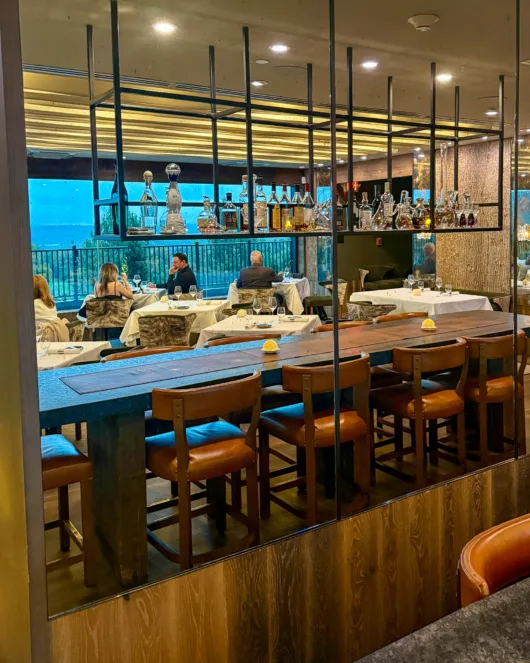
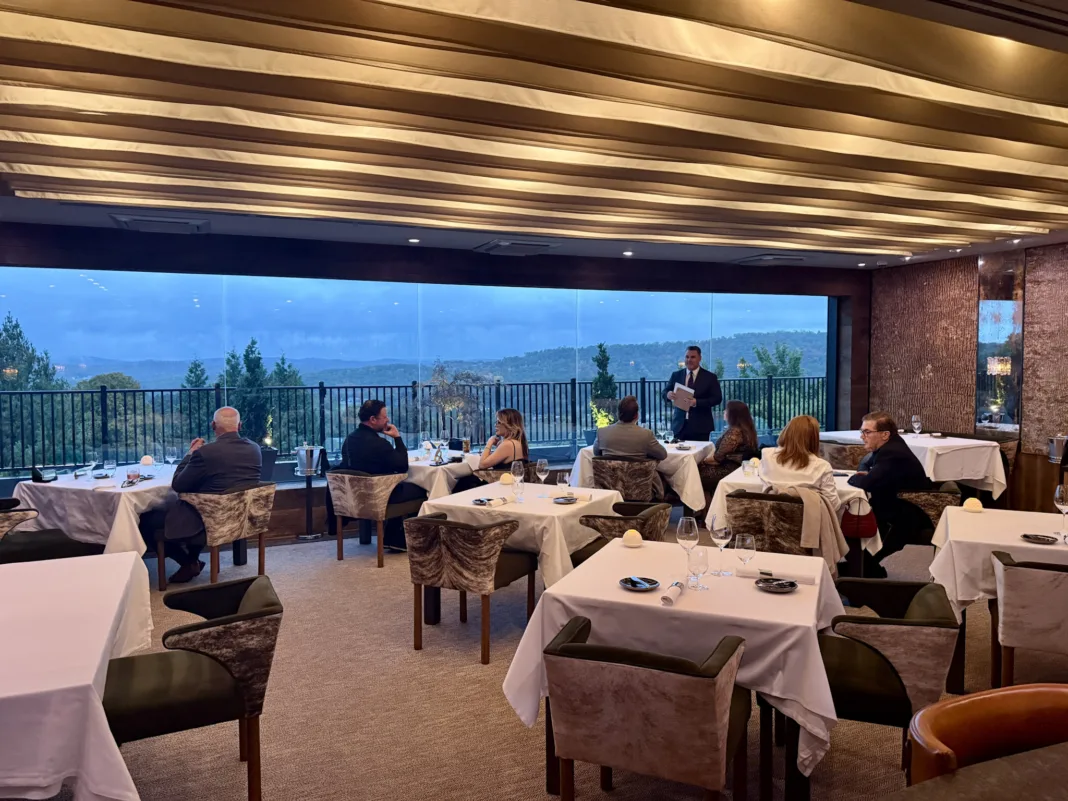
A broad expanse of windows frames the wooded hills and layered ridgelines beyond the restaurant. As evening settled in, the landscape softened into shades of blue, giving us another reason to pause between courses.
Inside, warm wood, textured walls, and a glowing ceiling of undulating panels lend the room a distinctive character. White tablecloths, upholstered chairs, and small table candles make it feel intimate, while cognac-colored leather seats at the communal table are an inviting place to begin.
The room’s distinctive design has its own story, which we explored in our coverage of Restaurant Latour’s transformation.
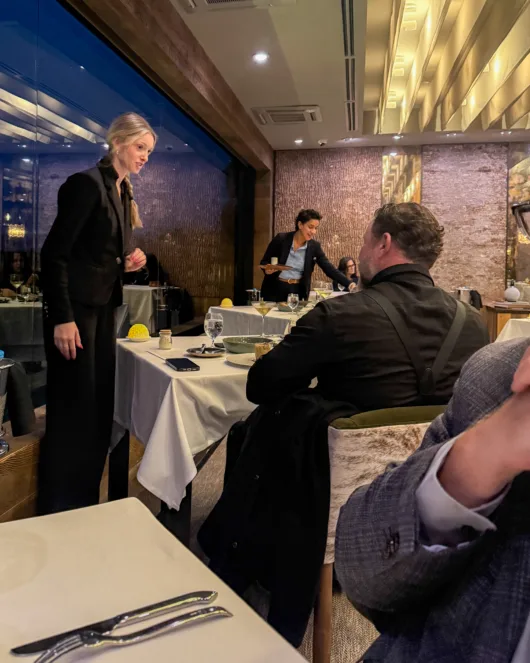
The hospitality made the evening feel special from the start. A server offered freshly sliced fruits and vegetables on a silver platter to accompany our glasses of water, while maître d’ Johnny Contreras welcomed us warmly. Every server presented the courses with poise and thoughtful explanations, and the sommelier’s guidance brought the wine pairings to life. The attention extended well beyond the plate.
Cocktails Rooted in the Property
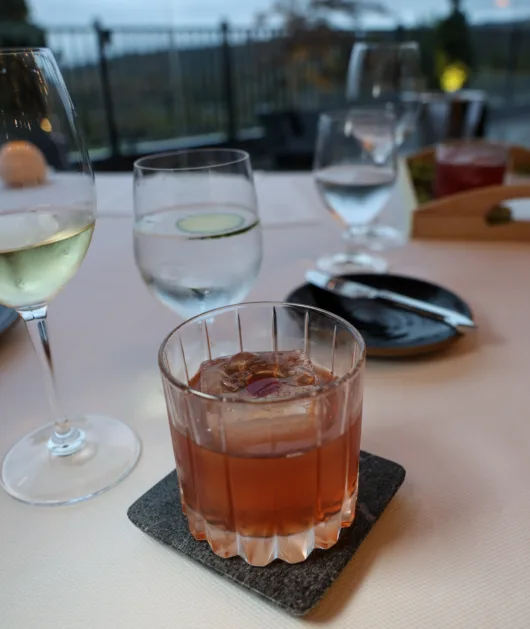
Johnny, also a sommelier, introduced us to a cocktail program with a distinctly local point of view. Each cocktail incorporates at least one ingredient foraged on the property, with both native and invasive plants on the menu.
It is a detail that invites questions: What was gathered? Where does it grow? How does it work in a drink?
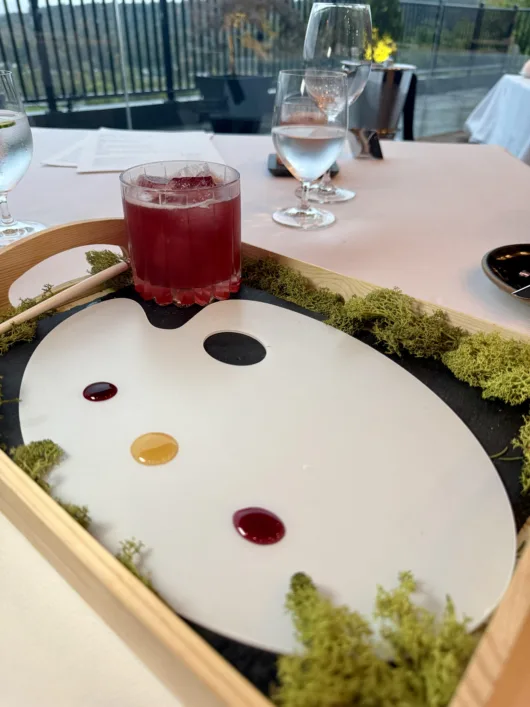
Among the cocktails we sampled were A Shrubbery, Earth Tonic, Nor Easter, and Paint and Sip. Their playful names offered a starting point for learning about the foraging program. Guests skipping alcohol can explore the menu’s “Free Spirit” section of nonalcoholic drinks.
Highlights from Our Tasting Menu
Behind the menu are Chef de Cuisine Matt Laurich and Resort Executive Chef Florian Wehrli. Their approach combines seasonal, locally sourced ingredients with foraging, fermentation, and preservation, connecting the dishes to the surrounding landscape. For Laurich, that connection extends beyond the kitchen: when he isn’t cooking, he can often be found hiking and foraging in the woods.
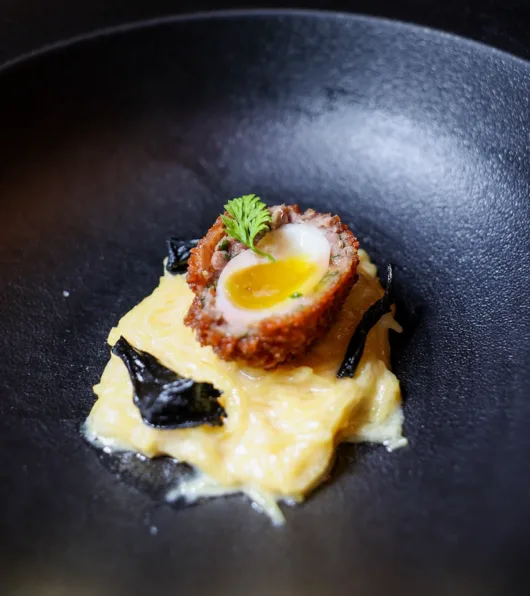
One of the evening’s most elaborate preparations centered on a very small egg. A soft-poached quail egg was wrapped in venison sausage, battered, and fried in the style of a Scotch egg.
It rested over spaghetti squash bound with macadamia nut crème and Bobolink seven-year-aged cheddar, then finished with crispy black trumpet mushroom. The description alone gave us plenty to unpack, bringing game, vegetables, nuts, and aged cheese together around that delicate egg.
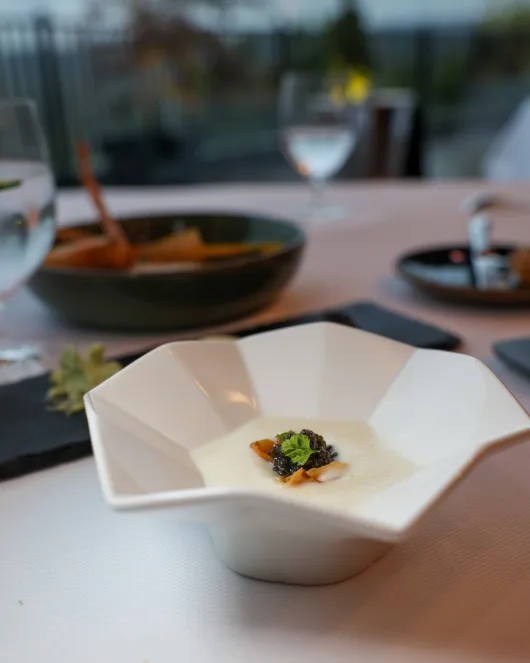
Sunchoke velouté offered another memorable presentation. Crispy sunchoke chips echoed the soup’s main ingredient, while chervil and Marshallberg Ossetra caviar completed the dish.
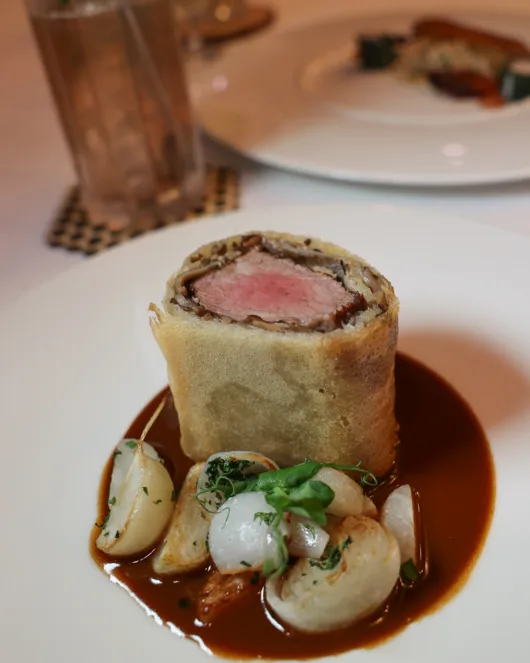
Elsewhere in the meal, the servers described New Jersey scallops, a Bison Wellington preparation, and a smoked rabbit dish. Their introductions made the ingredients and techniques part of the experience, allowing us to follow the kitchen’s thinking as dinner progressed.
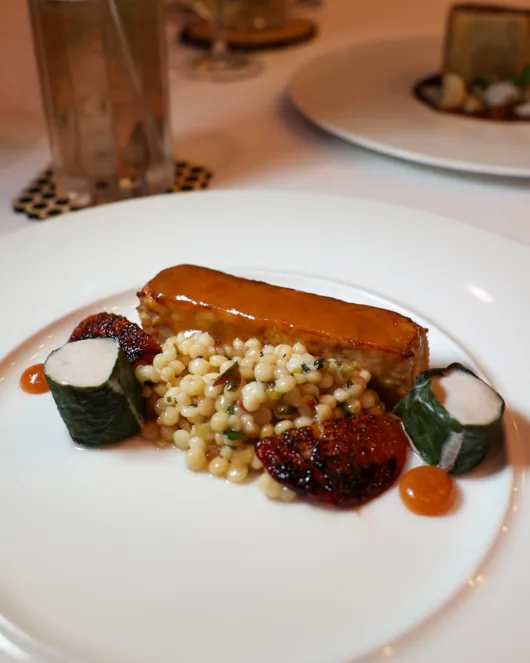
Rather than treating every plate as an isolated course, the meal encouraged us to notice connections: an ingredient’s texture, the role of smoke, or how a wine changed the next bite. There was always something new to discuss.
Wine Pairings with a Purpose
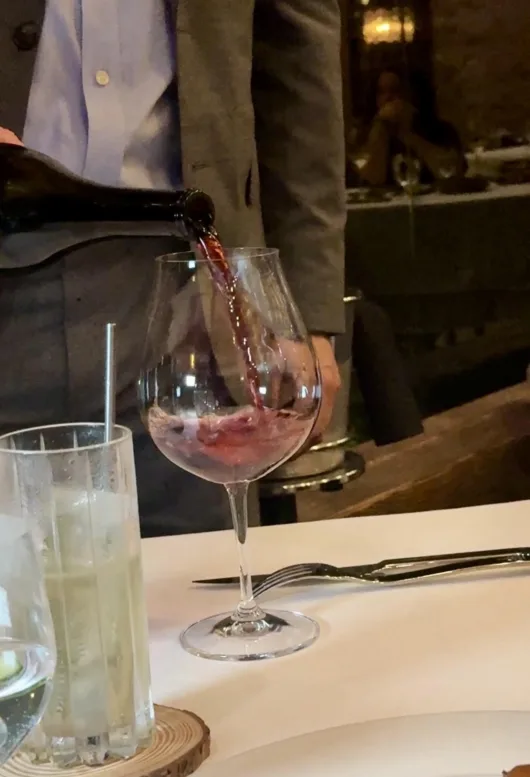
Latour’s wine service brought that same attention to detail. The explanations went beyond naming a region or producer; they explained why a particular wine belonged beside a dish.
A Napa Valley mountain-grown red blend accompanied the Wellington. For the rabbit, the sommelier paired a California Pinot Noir with an earthy character that matched the dish’s smokiness.
Later pours included a late-harvest Hungarian Tokaji and an Oloroso sherry from southern Spain. The Tokaji prompted a discussion of botrytis, often called noble rot, while the sherry’s nutty character connected to the cheese presentation.
For wine-curious diners, those conversations are part of the appeal. You have something specific to look for in the glass, then a chance to discover how it works with the food.
Make Time for the Wine Cellar
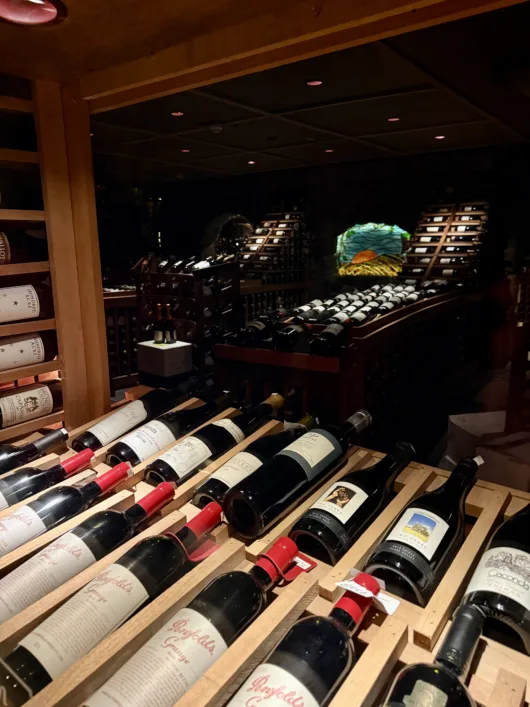
The resort’s wine cellar houses approximately 50,000 bottles, with a published list of around 6,000 labels. Nine interconnected chambers hold extensive collections from Bordeaux, Burgundy, the Rhône, Italy, and California, including multiple vintages from leading estates.
Our visit included a cellar tour and a guided tasting of five wines. In a room with arched viewing windows, wooden tables, and iron chandeliers, we also played games to identify aromas associated with wine.
Turn Dinner into a Getaway
After an evening like this, having a suite nearby felt like a very good decision. We returned to Grand Cascades Lodge without trading the last moments of dinner for a drive home.
For accommodations, the hotel’s atmosphere, and breakfast at Crystal Tavern, read our Crystal Springs Resort getaway story.